Mussorgsky · 1
Promenade
The opening of the Russian work: the visitor enters the exhibition. It is played just as Mussorgsky wrote it, adapted for violin, piano and cello.
an exhibition you can hear
In 1874 Mussorgsky walked through an imaginary exhibition and wrote music for each painting. A hundred and fifty years later, Agustín Fernández Sánchez did the same with Bolivian painting. Walk through the gallery: five paintings, a poem and three promenades.
An excerpt of each piece, in the order of the visit, with a brief explanation. Tap a number to jump to that piece.
The opening of Pictures at an Exhibition, from 1874: the visitor enters the gallery.
In 1874 the Russian composer Modest Mussorgsky wrote Pictures at an Exhibition in homage to his friend Viktor Hartmann, an architect and painter who had died the year before. The work is an imaginary stroll through his drawings and watercolors. The Bolivian series opens with two of its movements, arranged for trio by Agustín Fernández Sánchez.
The opening of the Russian work: the visitor enters the exhibition. It is played just as Mussorgsky wrote it, adapted for violin, piano and cello.
It illustrates the drawing The Hut on Fowl's Legs: the dwelling of the witch from an ancient Slavic myth, raised up on hen's legs like stilts.
The Bolivian exhibition begins. Like Mussorgsky's Promenade, this promenade has no painting: it is the music of the visitor walking toward the first canvas.
Now playing: Paseo I · 1:02
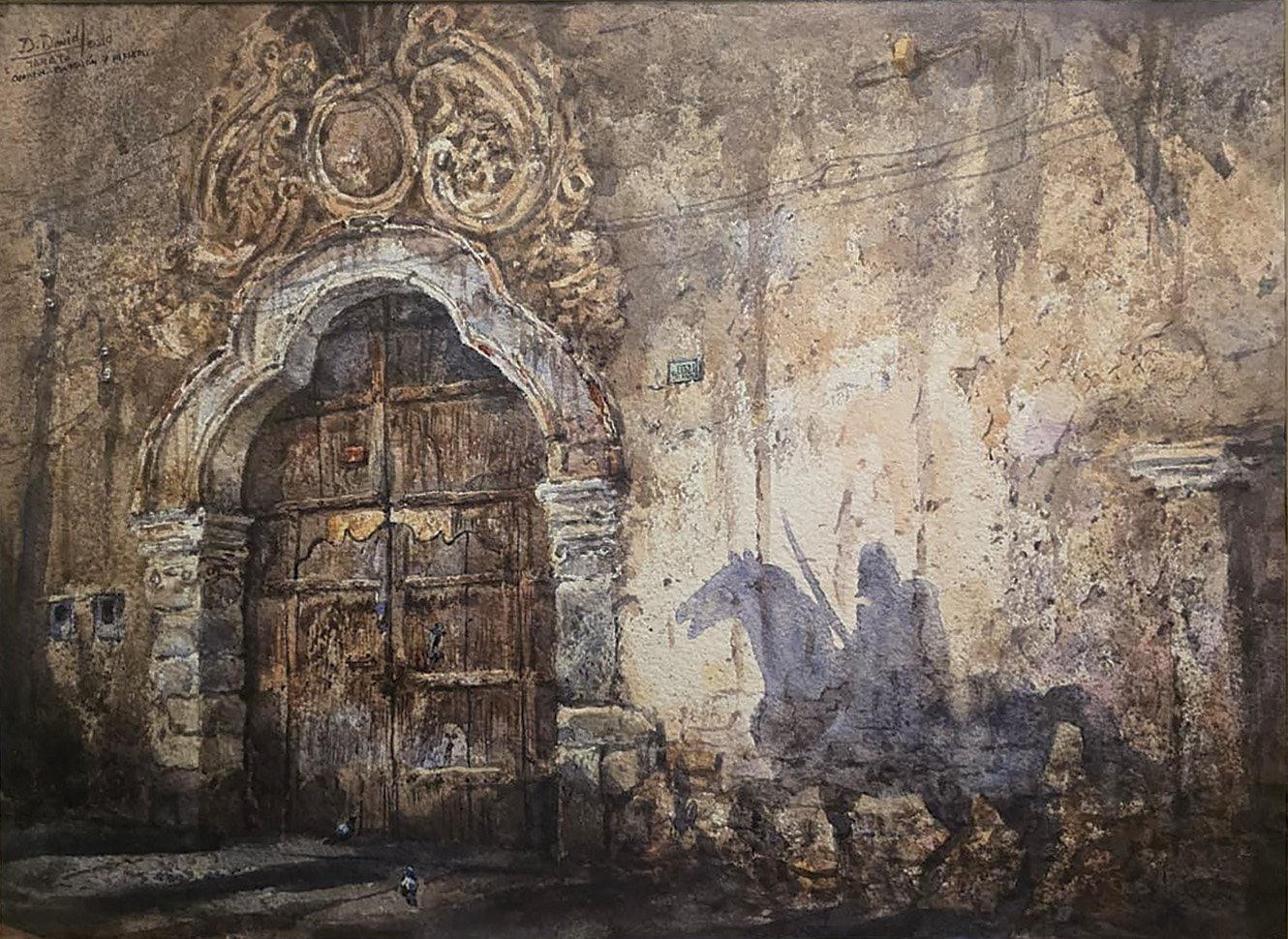
Evocation of Melgarejo. The music weaves a narrative of echoes and paraphrases of pieces from the past to portray facets of General Mariano Melgarejo's colorful career.
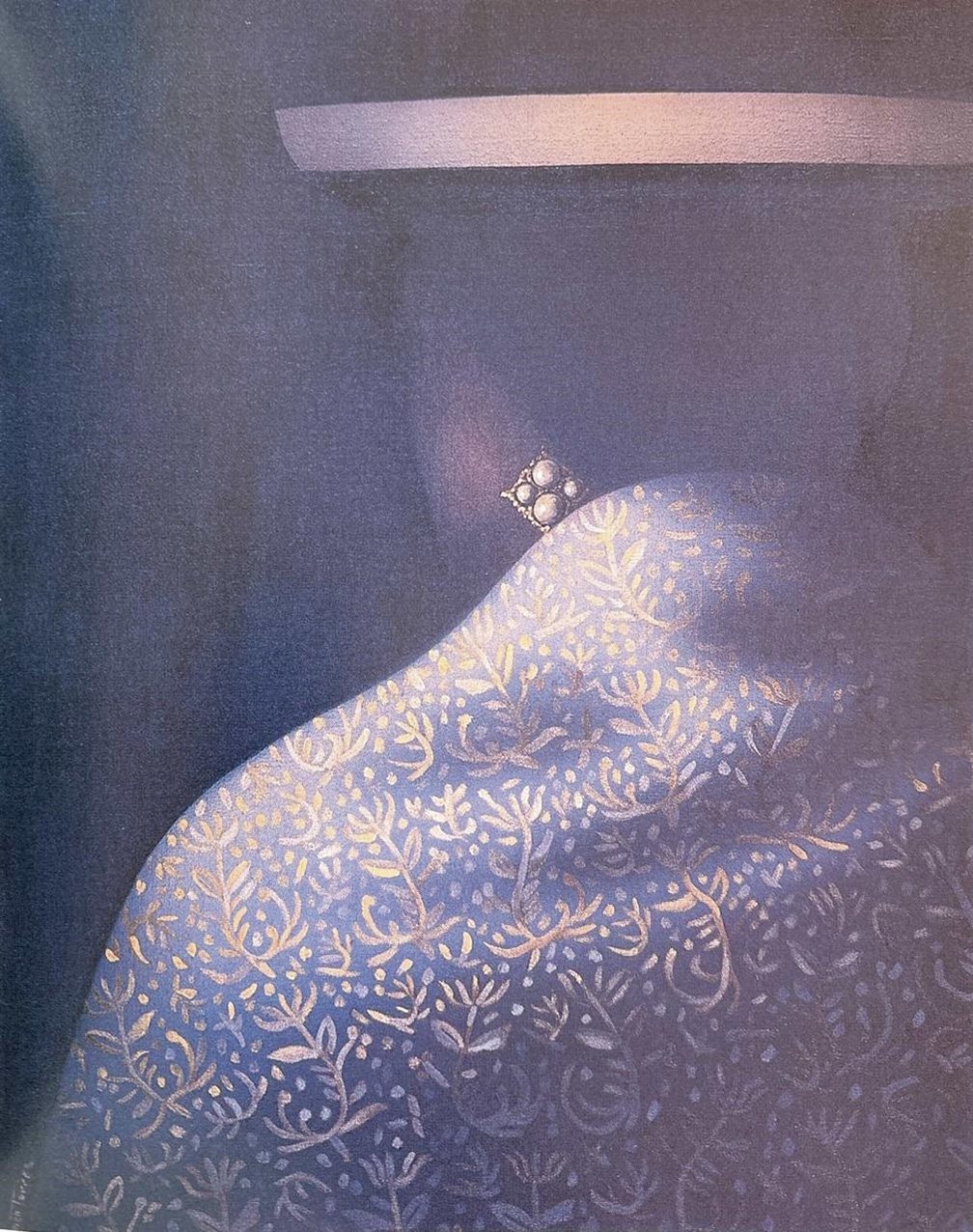
The music delves into the painting's enigmatic depths. The bottomless darkness and the gleam of the shawl and earring create an almost apocalyptic tension: barely showing her face, she commands the scene.
The second promenade through the gallery. The music changes with each promenade, like the visitor's mood after each painting.
Now playing: Paseo II · 1:20
Canto al hombre de la selva
the poem is the painting
This piece is born not from a painting but from Raúl Otero Reiche's verses on the people of Bolivia's eastern lowlands: the jungle, the plains and the rivers. The music does not try to imitate the poem's intensity; it gives it a frame of sound so the words can shine.
Live, the painting moves: Ariel Carvajal's choreography puts a body where a painting hangs here.
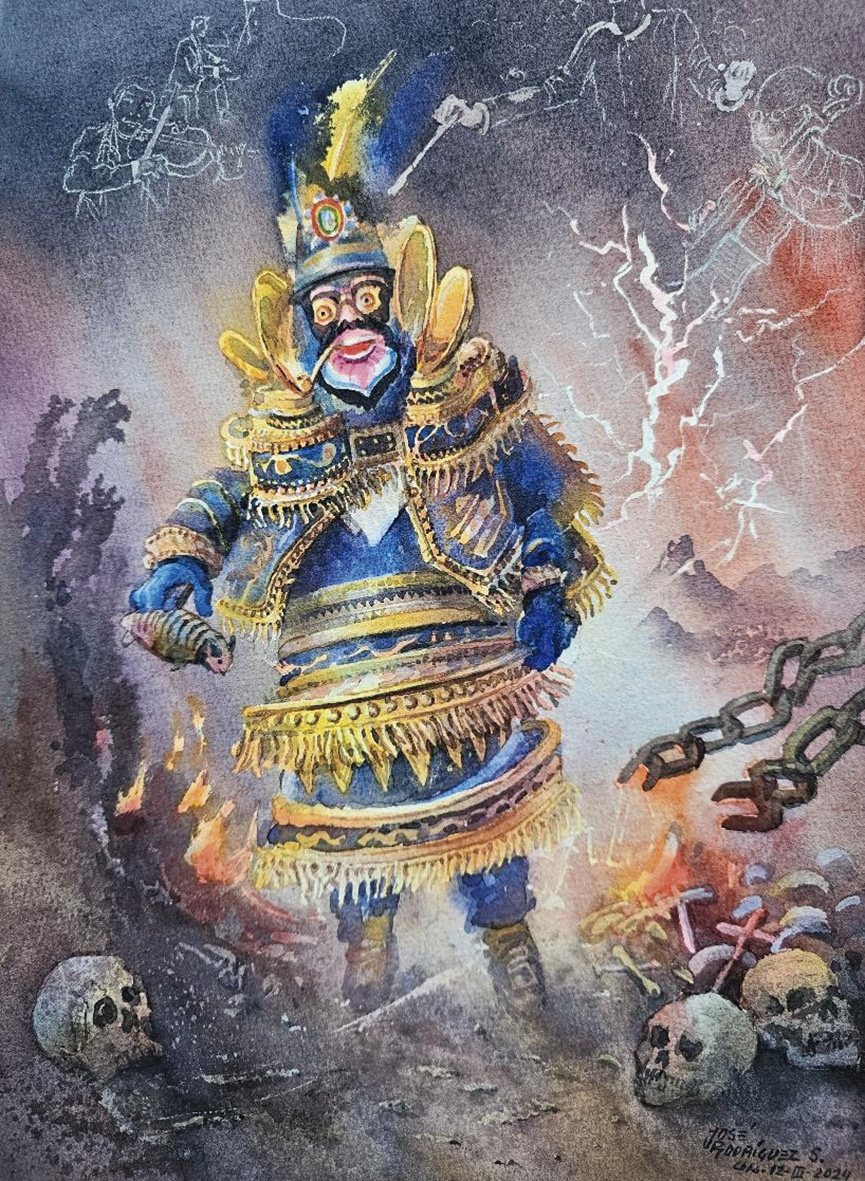
Here the order was reversed: the music came first, then the painting. The piece interweaves Night on Bald Mountain by Mussorgsky with Los quirquinchos, a morenada well known in the 1950s.
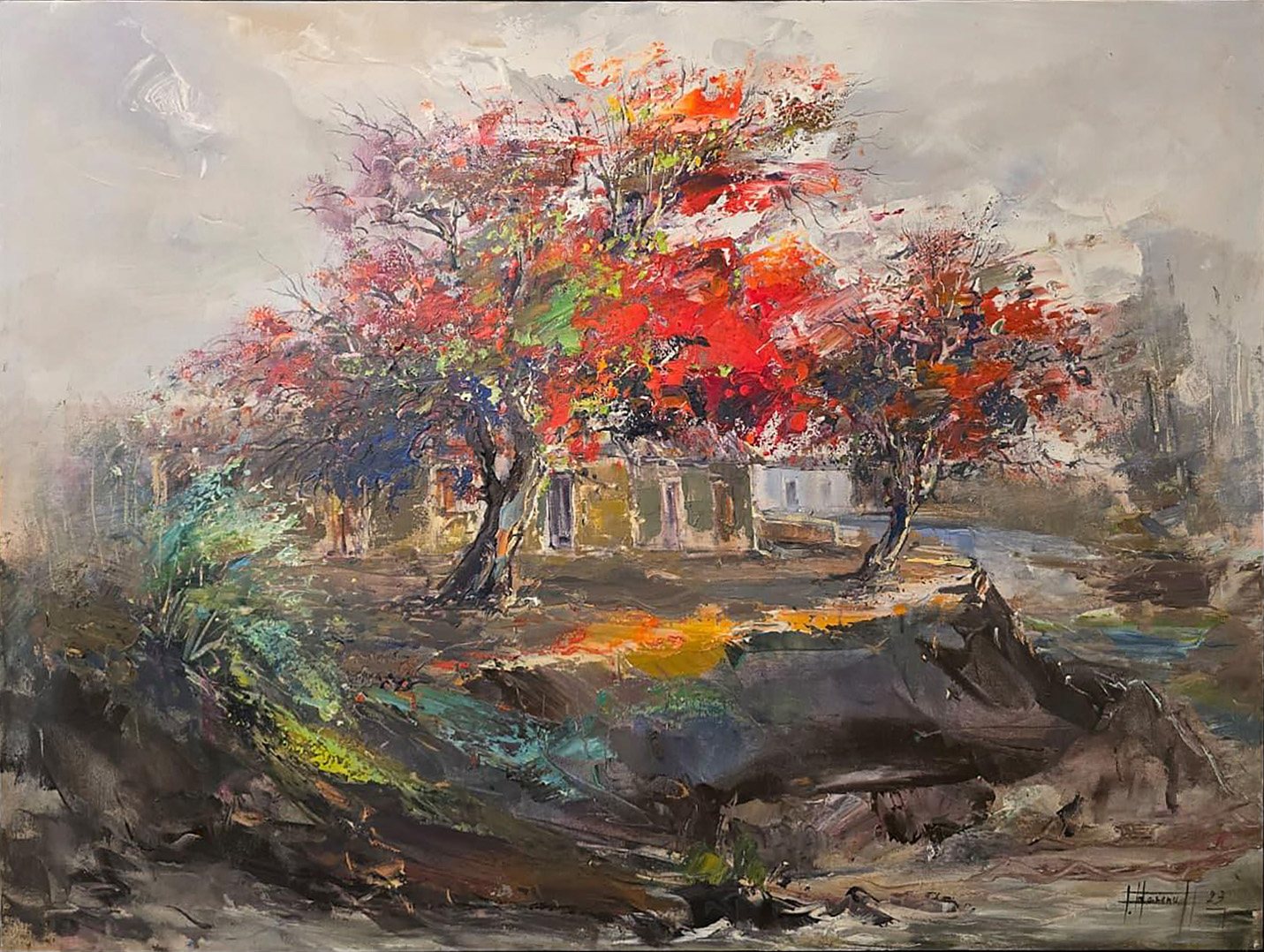
The music answers the crackle of spring color that pours from Fernando Antezana's oil painting.
The last promenade. After this one, the exhibition takes flight.
Now playing: Paseo III · 1:12
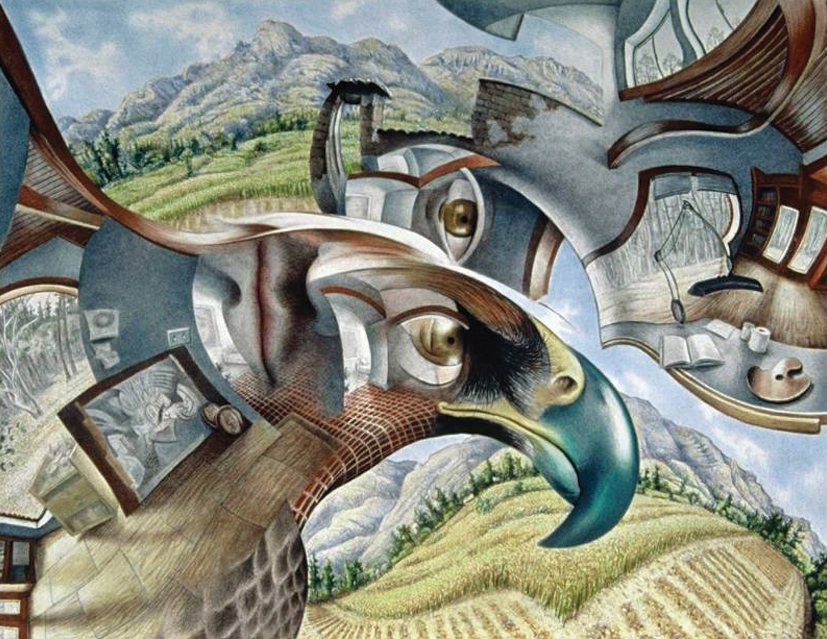
Lightness, propulsion and a defiance of gravity. Vertigo as it soars above the landscape, danger and release, and a near-forced landing on unpredictable ground. With this flight the work comes to an end.
End of the workEmilio Aliss
Cochabamba, October 2025
Reading the words of Teresa Rivera de Stahlie and Agustín Fernández, so full of history and meaning, I recall the auspicious birth of Trío Apolo on November 22, 1998, Saint Cecilia's Day, patron saint of music, at the Teatro Achá, with an unforgettable concert. The Trio was born with two clear goals: to make music at the highest professional level, and to value, document and expand Bolivian music. Agustín attended that birth and later wrote a highly flattering review in Los Tiempos that still resonates in our hearts. Today, 27 years later, we publish together the Trio's third score book of works and arrangements by Bolivian composers, celebrating not only Bolivia's Bicentennial year but also the 27 years of Trío Apolo. Agustín's works, true musical gems, appear in all three books, but this third one is devoted to his work, which also extends its reach to the richness of our painting, literature and choreography.
The happy birth of this artistic idea, which I remember reached me in a rush of emotion, is marked by the confluence of several substantial factors, described with mastery and insight by Teresa and Agustín, but its trigger was simply reading an announcement, a couple of years ago, of a new staging of «Mussorgsky's Pictures at an Exhibition», to be accompanied by a projection of the Hartmann paintings that inspired the work. The mere idea of hearing the music while admiring the paintings filled me with anticipation and a great desire to attend. I had never had that experience before. I could not go because I found out too late, but the small frustration of missing it, together with the synchronous contemplation of the beautiful paintings in my small art collection, suddenly lit in me that powerful spark that generates ideas which must be nurtured until they become reality. That is how the idea of creating «Cuadros de una exposición boliviana» came about, which I proposed shortly afterward to Agustín, who has happily collaborated with the Trio for many years and gladly accepted the challenge. That presentation, which I later learned had been prepared by Erick Rolón Ríos, an engineer, led me to contact him and ask him to write an introduction to Mussorgsky's work for this book. He never knew this story until I reached out to him. This is how we sometimes do things that, directly or indirectly, have an unsuspected impact on the people around us, people we sometimes do not even know. Every day, life calls us to become aware of its magic and synchronicity.
Like the group «Aleatorio» in 1978 (as Teresa describes), and together with Ariana and Fabio Luciano, my companions on this thrilling artistic journey, I hope this book will mark a milestone in the history of our Bolivian music and art, opening the door to new paths of union and integration: a union of cultures, of styles, of eras and geographies, of artistic genres… a union of souls in this Bicentennial year, which we all hope will mark a bountiful rebirth for Bolivia.
A renewed and heartfelt message of gratitude, in this year commemorating and celebrating Bolivia's Bicentennial, to María Teresa Rivera de Stahlie and Jan Stahlie, for their generous support of music in our beloved country and, in this particular case, of Bolivian chamber music. Their generosity allows us once again to expand Trío Apolo's valuable legacy of arrangements and new compositions for the young generations of Bolivia and the world. Special thanks to Agustín Fernández Sánchez, who agreed to embark on this exciting project.
Agustín's talent lets us discover anew works that hold moments of rare artistic contemplation, and that also pose technical and interpretive challenges worthy of the growth of instrumentalists and of chamber music in Bolivia and the world.
A special note of gratitude to the painters of the works in this exhibition: Fernando Antezana, David Darío Antezana (nephew and son of Gíldaro Antezana, respectively), José Rodríguez, Fernando Rodríguez Casas and Carmen Torres. I want to highlight that the music inspired by the painting of this last artist, «Mujer paceña», is deeply moving to me. It is also worth noting that in the case of «Morenada Montecalva», the process followed the reverse order: the music was composed first and the painting was created afterward. I thank José Rodríguez for this generous and talented contribution to our art. I also thank the many Bolivian painters close to us who have inspired this work, even if their paintings are not explicitly present. It is their art, dwelling in our emotions, that tints each new performance of this music with new colors.
My respect and gratitude to Raúl Otero Reiche for the poem «Canto al hombre de la selva», whose intensity years ago inspired in me the wish to fuse it with dance choreography. In the current version for «Cuadros de una exposición boliviana», we have the privileged fusion of the poem with Ariel Carvajal's choreographic and performing talent and with Agustín's music.
It is a privilege to offer this new work to the Bolivian artistic community.
Trío Apolo's third score book is dedicated to the work of Agustín Fernández Sánchez. It includes the 11 pieces of this exhibition for violin, piano and cello:
Arrangements: Agustín Fernández Sánchez
Music: Agustín Fernández Sánchez
the gallery, live
Music, painting, poetry and dance in a single concert, for theaters, festivals, schools and companies.